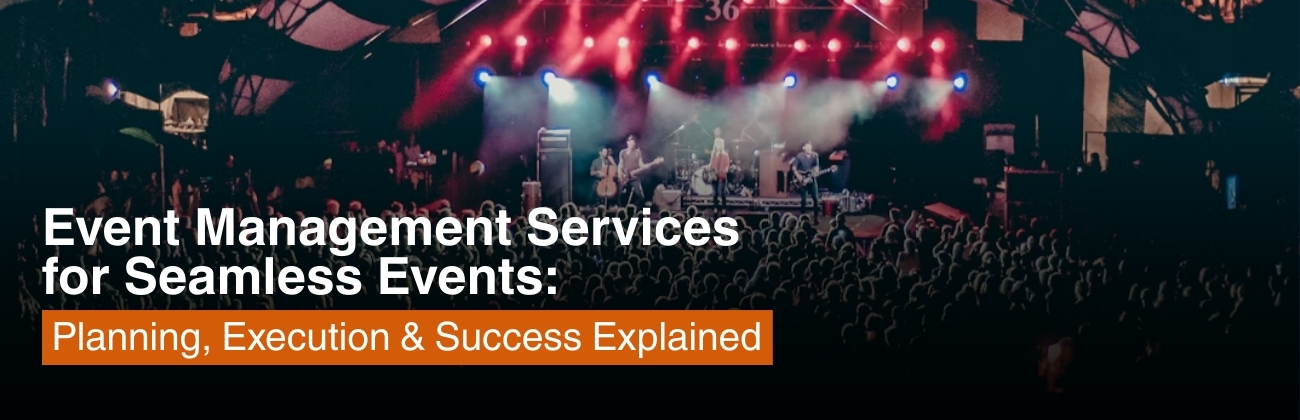
Planning a corporate event shouldn't feel like solving a puzzle with missing pieces. Yet for many businesses, coordinating vendors, managing budgets, and ensuring flawless execution becomes overwhelming fast.
This is where professional event management services step in—transforming complex logistics into seamless experiences that leave lasting impressions on your attendees and deliver real business results.
Whether you're planning a product launch, annual conference, or corporate gala, this guide explains everything you need to know about how professional event management works and why it matters for your success.
What Are Event Management Services?
Think of event management services as your complete event partner—handling everything from the initial brainstorming session to the final wrap-up report.
Unlike hiring individual vendors or trying to coordinate everything yourself, professional event management provides one team accountable for your entire event. They manage the details, coordinate the vendors, solve the problems, and ensure every piece works together perfectly.
The result? You get to focus on what matters most—engaging with your guests and achieving your business goals—while experts handle the complexity behind the scenes.
Why Professional Event Management Matters
Here's the reality: a well-planned event creates opportunities. A poorly executed one damages your reputation.
Professional event management services bring three critical advantages:
Experience You Can't Buy Elsewhere
Professional planners have managed dozens or hundreds of events, learning what works and what doesn't through real-world experience. They know which vendors deliver consistently, which ideas sound great but fail in practice, and which investments generate the highest attendee satisfaction. This expertise prevents costly mistakes and ensures your event benefits from proven best practices.
Time Your Team Gets Back
Planning a significant event can consume 100-200 hours of staff time—time your team could spend on revenue-generating activities. Professional planners handle the details, freeing your employees to focus on their actual jobs while the event planning proceeds expertly in the background.
Peace of Mind When It Matters Most
Knowing experienced professionals are managing every detail lets you sleep well the night before your event. You can engage authentically with attendees instead of worrying about whether the caterer will arrive on time or the presentation equipment will work correctly.
The Three Keys to Seamless Events
Successful events aren't accidents—they're built on three essential foundations:
1. Strategic Planning That Sets Clear Direction
Great events start with clear objectives. Are you launching a product? Building client relationships? Educating stakeholders? Celebrating a milestone?
Professional planners translate these goals into concrete plans with specific success metrics, realistic timelines, detailed budgets, and clear attendee experiences designed to achieve your objectives.
This strategic foundation prevents the reactive decision-making that characterizes poorly planned events. Every choice—from venue selection to menu design—gets evaluated against your stated goals rather than personal preferences or arbitrary decisions.
2. Flawless Execution That Brings Plans to Life
Perfect planning means nothing without excellent execution. This is where event management services truly shine.
Professional execution means coordinating dozens of vendors seamlessly, managing minute-by-minute timelines precisely, solving unexpected problems quickly before attendees notice them, and maintaining quality standards across every detail from registration to departure.
Experienced teams bring backup plans for critical elements, communication systems that keep everyone aligned, and the calm problem-solving abilities that prevent minor issues from becoming major disruptions.
3. Measurable Results That Prove Value
Professional event management services don’t just deliver events—they demonstrate results through attendee satisfaction scores, engagement metrics during sessions, lead generation numbers, social media reach and sentiment, budget performance reports, and achievement of your stated objectives, powered by True Cloud ERP insights.
This data-driven approach proves return on investment and identifies specific improvements for future events, transforming event management from subjective impressions into an objective business strategy.
How Event Planning Actually Works

Understanding the planning process helps you participate effectively as a partner. Here's how professional planners approach your event:
Step 1: Understanding Your Vision (Week 1-2)
Everything begins with discovery. Professional planners conduct detailed conversations to understand your event's purpose and desired outcomes, who will attend and what matters to them, your budget parameters and flexibility, your brand standards and messaging priorities, and how you'll measure success afterward.
This foundation ensures every subsequent decision aligns with your goals. Skipping thorough discovery creates misalignment that wastes time and money fixing later when changes become expensive.
Step 2: Creating Your Event Concept (Week 2-4)
With clear objectives established, creative development begins. Planners develop theme options that reinforce your message, create visual presentations showing what the event will feel like, design the attendee journey from arrival through departure, propose memorable elements that create social media moments, and outline programming that engages your specific audience.
The best concepts balance creative ambition with practical constraints—delivering stunning experiences within realistic budgets and timelines rather than proposing ideas that sound impressive but can't actually be executed well.
Step 3: Securing the Perfect Venue (Week 3-6)
Location profoundly impacts event success. Event management services leverage industry relationships to find venues meeting your needs, negotiate favorable pricing and contract terms, assess technical capabilities through detailed site visits, coordinate logistics from parking to accessibility, and secure backup options when weather threatens outdoor elements.
Their experience prevents choosing venues with hidden limitations that only become apparent during setup—like inadequate power for your audio-visual needs or acoustics that make speakers hard to hear.
Step 4: Building Your Vendor Team (Week 4-8)
Executing seamless events requires coordinating caterers, audio-visual technicians, decorators, photographers, entertainers, transportation providers, and potentially dozens of other specialists.
Professional planners maintain networks of trusted vendors built through years of collaboration. These relationships provide priority scheduling even during busy seasons, preferential pricing that often offsets management fees, proven reliability you can count on, and flexibility when last-minute adjustments become necessary.
They handle all communications, contracts, and coordination—giving you one point of contact instead of managing multiple vendor relationships yourself.
Step 5: Developing Content and Programming (Week 5-10)
For events with speakers or educational sessions, content development ensures programming delivers real value. Planners identify engaging speakers who connect with your audience, develop topics addressing attendee interests, create presentation standards ensuring quality and consistency, design interactive formats instead of passive lectures, and establish pacing that maintains energy throughout.
They coordinate rehearsals, manage speaker logistics, and create backup plans for unexpected cancellations—ensuring programming proceeds professionally regardless of last-minute challenges.
Step 6: Managing Registration and Marketing (Week 6-12)
Getting the right people to attend requires effective promotion. Event management services create marketing campaigns across email and social media, design landing pages that convert visitors to registrants, implement registration systems that are mobile-friendly and easy to use, collect dietary preferences and accessibility needs, and manage waitlists for capacity-constrained events.
These systems reduce your administrative burden while providing valuable data about attendee demographics and interests that inform both event planning and broader marketing strategies.
Step 7: Coordinating All the Details (Week 8-Event Day)
As your event approaches, detailed coordination brings everything together. Professional planners create minute-by-minute timelines for vendors and staff, coordinate transportation and accommodations for multi-day events, arrange signage and wayfinding throughout the venue, manage security and access control when needed, and establish emergency procedures for unexpected situations.
This meticulous planning creates the invisible structure that makes events feel effortless to attendees while actually requiring enormous behind-the-scenes coordination.
Step 8: Final Preparations and Rehearsals (Final Week)
The last days before your event involve intensive preparation. Teams conduct speaker and technical rehearsals, test all equipment thoroughly, perform final walkthroughs with venue staff, brief on-site teams about their specific roles, and complete quality checks on every element.
These final preparations catch the small problems that could become big issues—ensuring everything is truly ready when your first attendee arrives.
What Happens on Event Day
Event day is when months of planning become a visible reality. Here's how professional execution makes the difference:
Morning: Setup and Quality Control
Event management services arrive hours before guests to supervise setup and ensure quality. They verify venue configuration matches plans, inspect and test all audio-visual equipment, review catering presentation and menu accuracy, examine decoration placement and branding, and test registration systems one final time.
This quality control catches discrepancies between what was ordered and what was delivered—fixing problems before attendees arrive instead of scrambling visibly during the event.
Guest Arrival: First Impressions Matter
Professional teams manage efficient registration to prevent frustrating lines, greet guests warmly while directing them appropriately, distribute materials and name badges smoothly, answer questions confidently, and resolve last-minute issues discreetly—key elements of effective event management.
This organized welcome creates positive first impressions that set the tone for your entire event, rather than starting with frustration from a disorganized check-in.
During the Event: Keeping Everything Flowing
Throughout your program, coordinators cue technical teams for transitions, manage speaker introductions and timing, monitor the schedule and communicate adjustments, coordinate breaks and meal service, and handle unexpected challenges invisibly.
This active management maintains energy and engagement while preventing the awkward gaps or technical problems that derail poorly managed events.
Problem Solving: When the Unexpected Happens
Despite perfect planning, unexpected issues arise—equipment failures, speaker emergencies, weather changes, or countless other possibilities.
Professional event management services quickly assess situations, identify practical solutions, mobilize necessary resources, implement fixes efficiently, and communicate appropriately with affected parties—all while keeping your event on track.
After Guests Leave: Professional Conclusion
Work continues after attendees depart through supervised breakdown, ensuring nothing gets lost, settlement with vendors confirming services delivered, collection of materials and promotional items, documentation of any issues for follow-up, and preliminary team debriefing while experiences are fresh.
This systematic conclusion prevents the loose ends that often plague events where coordinators consider their work finished when the last guest leaves.
Proving Your Event Worked: Measuring Success
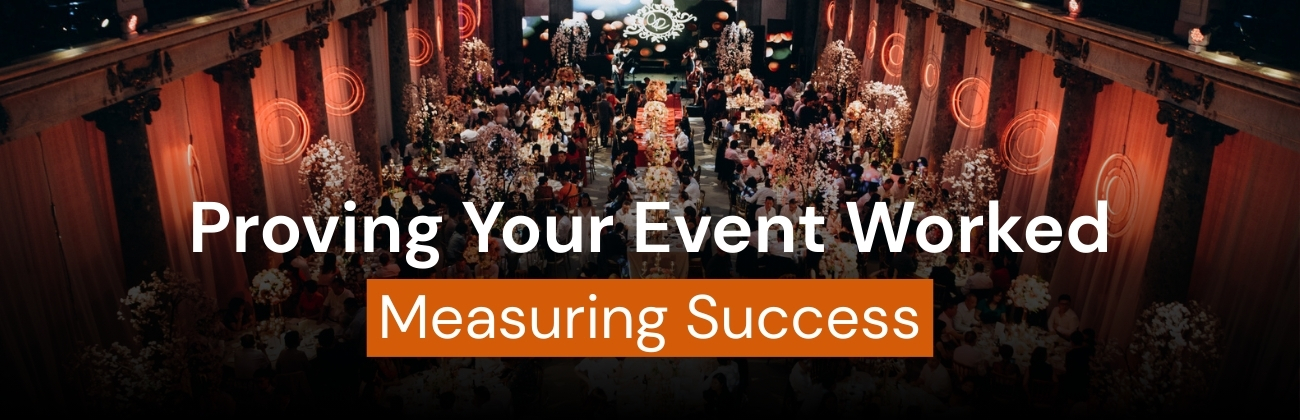
Professional event management services deliver a comprehensive analysis demonstrating what your event achieved:
The Numbers That Matter
Data provides objective measurement, including actual attendance versus projections, satisfaction scores from post-event surveys, engagement rates during sessions and activities, leads generated for sales teams, social media reach and sentiment, and budget performance versus initial estimates.
This reporting demonstrates return on investment and informs conversations about event value and future funding decisions.
What Attendees Actually Said
Beyond numbers, qualitative feedback reveals what truly resonated. Post-event surveys capture favorite moments and disappointments, suggestions for improvement, overall impressions, key takeaways, and unexpected positive or negative experiences.
Professional analysis identifies themes and patterns in this feedback, separating individual preferences from broadly shared opinions and spotting opportunities you might miss reviewing raw data alone.
Financial Reality Check
Detailed financial reviews compare actual costs against budgets for every category, identify where estimates were accurate or off, calculate efficiency metrics like cost per attendee, evaluate which investments delivered the most value, and develop recommendations for future budget allocation.
This transparency demonstrates fiscal responsibility and helps optimize future event spending based on what actually generates results.
Learning for Next Time
The most valuable analysis outcome is documented learning that improves future events. Professional reports capture what to definitely repeat, what encountered challenges and how they were solved, which vendors earned future business, timeline adjustments that would help next time, and specific recommendations for enhancement.
This institutional knowledge becomes invaluable for recurring events where year-over-year improvement compounds into significantly better experiences over time.
Different Events, Different Needs
Various event types present unique challenges requiring specialized expertise:
Corporate Conferences
Multi-day events with concurrent sessions need sophisticated speaker logistics across numerous presenters, audio-visual coordination for multiple rooms simultaneously, attendee flow management between sessions, and sustained energy maintenance across extended programs. Professional event management services bring the systems and experience these complex events demand.
Product Launches
Launch events carry high stakes where execution directly impacts market perception. Creating buzz-worthy experiences requires creative concepts that differentiate your product, precise timing that builds anticipation, flawless technical execution of demonstrations, and strategic audience selection that generates authentic enthusiasm and word-of-mouth.
Team Building Events
Internal events focused on culture and morale need an understanding of organizational dynamics and activities that genuinely connect with employee values. Professional planners design experiences balancing development objectives with enjoyment, managing diverse preferences across employee groups, and creating inclusivity that strengthens rather than divides.
Fundraising Galas
Nonprofit events must maximize revenue while delivering donor experiences inspiring continued support. This requires balancing cost control with impressive presentation, managing auction logistics and payment processing, creating emotional connections to causes, and ensuring donors feel genuinely appreciated for their contributions.
Trade Shows and Exhibitions
Large-scale exhibition events demand expert management of booth coordination and exhibitor communications, attendee flow across large venues, concurrent programming schedules, and backend logistics that prevent the chaos characterizing poorly managed trade events.
Choosing Your Event Management Partner
Selecting the right event management services significantly impacts both event success and your partnership experience:
Look for Relevant Experience
Review portfolios focusing on events similar to yours in size, complexity, format, and industry. Ask detailed questions about specific challenges they've managed and problem-solving approaches. Request references from comparable clients and have thorough conversations about communication quality, reliability, and budget management.
Strong portfolios show both breadth across event types and depth within your specific category—indicating they bring general best practices plus specialized knowledge to your event.
Understand What You're Actually Getting
Clarify exactly what services are included in pricing, what additional costs might arise, how scope changes affect fees, vendor relationships they leverage versus requiring your preferred vendors, and payment schedules aligning with your budgeting.
Transparent pricing discussions prevent uncomfortable surprises later and ensure both parties clearly understand financial expectations from the start.
Chemistry Actually Matters
You'll work closely with your event team for weeks or months, making compatibility as important as competence. During conversations, assess whether they listen carefully and ask insightful questions, explain concepts clearly without talking down to you, show genuine enthusiasm for your specific event, demonstrate flexibility with your ideas, and establish rapport, suggesting productive collaboration.
Trust your instincts—even highly skilled planners who don't communicate well with you will create frustration throughout the process.
Ask About Their Technology
Modern event management requires sophisticated tools. Ask about platforms they use for registration and communication, how technology improves their efficiency, reporting, and analytics they provide, capabilities for virtual or hybrid events if relevant, and integration with your existing systems.
Technology adoption indicates operational sophistication and typically means better organization, tracking, and communication throughout your partnership.
Getting the Most From Your Partnership
Once you've hired professional event management services, these practices ensure optimal results:
Communicate Clearly From the Start
Define meeting frequency and format, information needed in regular updates, decision-making authority for various topics, escalation processes for urgent issues, and expected response times for questions.
Clear protocols prevent frustration from unmet communication expectations and keep everyone aligned throughout planning.
Make Decisions Promptly
Event planning operates on tight timelines where delays cascade into problems. When planners need your approval, respond within agreed timeframes even if that means making imperfect choices. Good decisions made promptly almost always produce better outcomes than perfect decisions made too late.
Empower your team with clear authority levels, preventing bottlenecks while maintaining appropriate control over major strategic and financial decisions.
Balance Trust With Involvement
You hired professionals for their expertise, so trust their recommendations while staying appropriately involved. Micromanaging undermines their value and creates inefficiency, while complete disengagement risks misalignment.
Participate actively in strategic decisions about objectives, concepts, and major budgets while delegating tactical execution to your professional team.
Share What They Can't Know
Your organization's culture, history, and politics provide context that external planners cannot intuitively understand. Share information about past event successes and failures, organizational sensitivities affecting decisions, key stakeholder preferences carrying particular weight, and constraints that might not be obvious.
This institutional knowledge helps planners navigate your organization effectively and make recommendations fitting your culture.
Common Challenges and How Professionals Handle Them
Even with expert event management services, certain challenges arise frequently:
When Budgets Get Tight
Stakeholders often want to add elements without removing others, straining budgets. Professional planners help by clearly documenting what budgets support, presenting trade-off options for new requests, identifying cost-saving alternatives achieving similar objectives, and diplomatically reinforcing budget realities before spending commitments are made.
When Everyone Has Different Opinions
Multiple stakeholders often struggle to reach consensus about priorities and preferences. Professional planners facilitate alignment by documenting objectives and using them as decision criteria, presenting options with clear rationales tied to goals, and helping stakeholders find compromises serving overall success rather than individual preferences.
When Vendors Underperform
Despite careful selection, vendors occasionally disappoint. Professionals mitigate this through detailed contracts specifying quality standards, regular progress reviews before events, experienced quality assessment catching problems early, and established relationships giving them leverage to demand corrections.
When Weather or Other Factors Intervene
External factors like weather or transportation disruptions can threaten events. Professional planners develop contingencies including backup spaces, weather monitoring and decision protocols, communication plans for significant changes, and flexible contracts allowing last-minute adjustments.
While you can't prevent external factors, thorough contingency planning ensures they don't derail your event or create chaos.
Make Your Next Event Truly Seamless
Professional event management services transform stressful obligations into confident execution that delivers business results and memorable experiences—supported by web & app development with ERP solutions for seamless planning and coordination.
The difference between events that simply happen and those that truly succeed lies in countless carefully coordinated details—details that professional planners orchestrate seamlessly while you focus on engaging with attendees and achieving your goals.
Whether you're planning your first major corporate event or seeking to elevate recurring gatherings, partnering with experienced professionals ensures your vision becomes reality while protecting your time, budget, and reputation.
Ready to Create an Exceptional Event?
SolutionBowl specializes in comprehensive event management services combining strategic planning, creative design, and flawless execution.
Our experienced team has successfully managed diverse events across industries—from intimate executive gatherings to large-scale conferences. We understand that every event represents your brand and advances business objectives beyond the event day itself.
That's why we deliver:
- Complete Event Management – We handle every aspect from initial concept through post-event analysis, giving you one accountable partner for seamless execution.
- Proven Expertise – Our planners bring real experience across event types, industries, and formats, ensuring we understand your specific challenges and opportunities.
- Premium Vendor Access – Established relationships provide priority scheduling, preferential pricing, and confidence in quality based on proven performance.
- Technology-Enabled Service – Modern platforms deliver transparency, accuracy, and valuable data demonstrating your event ROI.
- True Partnership – We work as an extension of your team, taking time to understand your organization, culture, and objectives for authentic brand representation.
- Measurable Results – Our events consistently achieve high satisfaction scores, strong engagement metrics, and business outcomes justifying investment.
Let's Create Your Next Success Story
Whether you're planning a product launch, annual conference, team building retreat, or corporate gala, we're ready to make it exceptional.
Contact SolutionBowl Today to schedule a consultation and discover how our professional event management transforms your vision into a flawlessly executed reality.